Turning Inspection Technology into a Clear Operational and Financial Business Case
In many manufacturing organizations, metrology investments are proposed by manufacturing engineers or quality managers, but approved by executives who may not be deeply familiar with measurement technologies or the reality of metrology and quality experts' day-to-day activities.
This can create a communication gap. Engineers often focus on accuracy, resolution, and measurement capability. Executive teams, however, evaluate investments through a different lens: cost, risk, operational impact, and long‑term return.
As a result, many strong metrology projects stall internally, not because the technology is wrong, but because the benefits are not communicated in the terms leadership uses to make decisions.
This guide explains how to present a metrology investment in a way that resonates with executive teams. If you are looking to secure internal approval for your next metrology project, the following framework can help translate technical value into a clear operational and financial case.
Start with the Operational Problem, Not the Technology
Executives rarely approve technology simply because it produces better measurements. They approve investments that clearly solve operational problems and improve the business.
Instead of starting with the scanner, measurement technology, or system architecture, begin with the production challenge the solution addresses.
Common examples include:
- Inspection bottlenecks slowing production
- Defects discovered too late in the manufacturing process
- Manual inspection processes that require significant labor
- Hard to evolve and costly-to-maintain systems
- Lack of traceable digital records for quality
- Reliance on sampling that limits confidence in production quality
When the conversation starts with operational impact rather than technology, leadership immediately understands that the project is about improving production performance, not simply adding equipment.
Translate Metrology into Business Outcomes
Once the operational problem is clear, the next step is translating measurement capability into business impact. The following outcomes are typically the most relevant to executive teams.

Throughput and Cycle Time
Inline or at‑line inspection can eliminate measurement bottlenecks and support production pace. Faster inspection cycles allow manufacturing teams to maintain production speed without compromising quality verification.
Earlier Defect Detection
When issues are detected earlier in the production process, the cost of correction is dramatically lower. Early detection reduces scrap, rework, and downstream disruption.
Digital Twin Creation
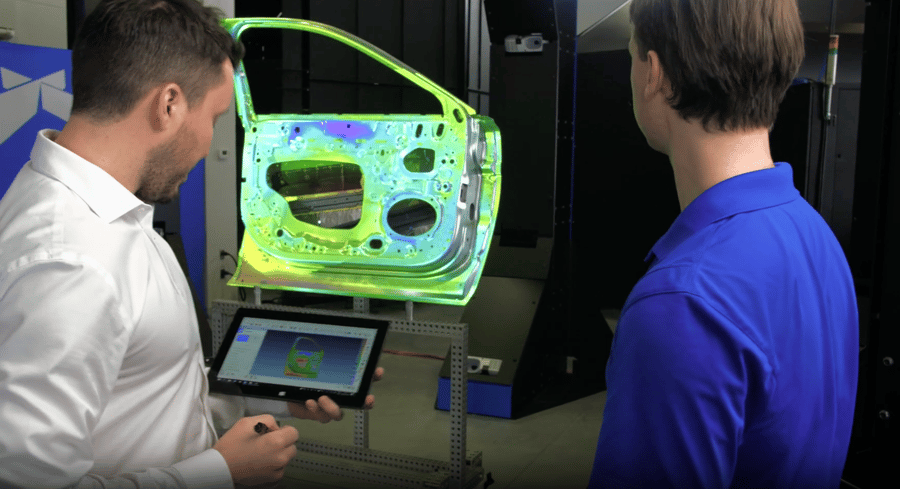
Modern metrology systems can generate a complete digital twin of inspected parts. This digital record enables:
- Full inspection traceability
- Long‑term quality analysis
- Improved process understanding
Over time, this data becomes a valuable resource for engineering, manufacturing, and quality teams.
Labor Reallocation
Automation reduces the need for manual inspection activities, allowing skilled employees to focus on higher‑value work such as process improvement, troubleshooting, and program launches.
Long‑Term System Longevity
Executives want confidence that a system is easy to maintain and will remain valuable beyond a single program. Durable and flexible metrology platforms that can adapt to multiple parts and evolving production programs help protect the original investment.
The Hidden Cost of Traditional Automated Metrology
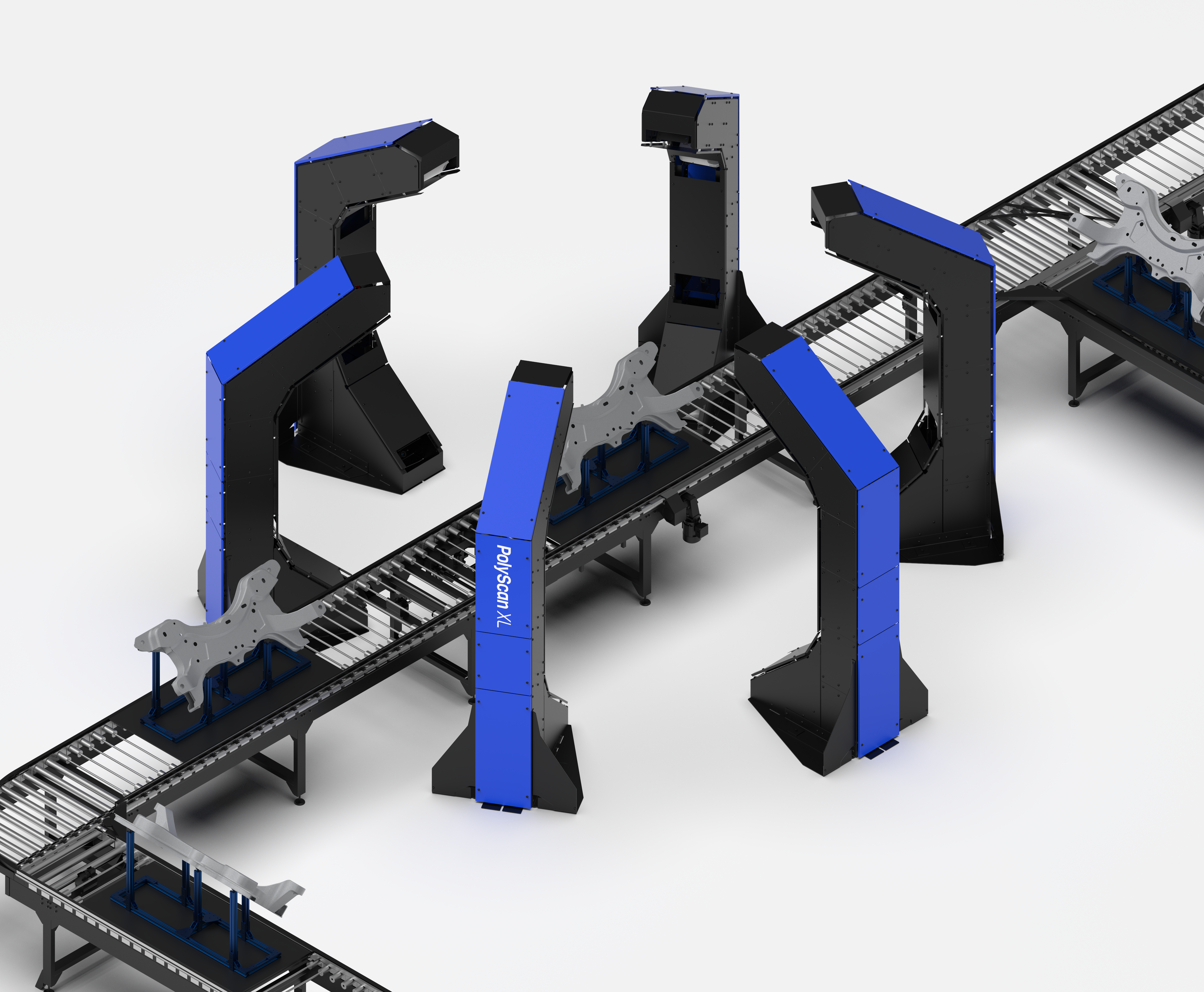
When organizations explore automated inspection, the initial discussion often focuses on robotic cells or traditional coordinate measuring machines (CMMs).
Robotic Automated Metrology
Robotic metrology cells typically require: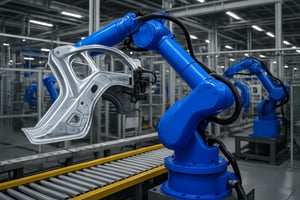
- Costly industrial robots
- Safety cages and protocols
- Complex programming
- Ongoing maintenance
- Production line interruptions
While these systems can provide automation, they also introduce additional lifecycle costs. For executive teams evaluating long‑term investments, these operational risks and maintenance costs must be considered alongside the initial system price.
Part Preparation Requirements 
Some scanning technologies require targets or spray coatings before measurement. While often overlooked, this preparation step introduces additional cost and labor.
More importantly, it slows the inspection process and can make true inline inspection impossible. If every part requires preparation, the process is often pushed at‑line or offline, making 100% part inspection much more difficult.
Reducing mechanical complexity and preparation steps can significantly improve long‑term operational efficiency.
Longevity: Protecting the Investment
Executives want confidence that capital equipment will deliver value for many years. A strong metrology platform should support:
- Multiple parts and production programs
- Evolving product designs
- Future inspection strategies
- Simple maintenance and cost‑effective replacement components
Offline planning and simulation tools, allow manufacturing teams to prepare inspection strategies before new parts reach the production line. This capability helps accelerate program launches while minimizing disruption to existing production.
The Role of an Integrated Metrology Ecosystem
As inspection technologies evolve, manufacturers increasingly benefit from centralized platforms that connect multiple metrology tools and workflows.
Polyrix systems, for example, produce outputs in standard file formats such as XYZIJK point clouds and STL meshes. These formats are compatible with widely used inspection platforms including Polyworks|Inspector, GOM Inspect, and Geomagic.
This interoperability allows manufacturers to integrate automated inspection seamlessly into their existing metrology software ecosystem.
Centralized platforms, such as the Polyrix Portal, further streamline operations by connecting metrology technologies, data management, and reporting workflows within a unified environment.
Estimating ROI: Payback Period and Business Impact
Metrology investments are typically evaluated alongside other capital projects. Depending on the production environment, these systems can represent investments in the range of several hundred thousand dollars. To gain approval, engineers must clearly explain the expected return on investment.
ROI typically comes from a combination of factors including:
- Reduced inspection cycle time
- Earlier detection of manufacturing defects
- Decreased manual inspection labor
- Improved production uptime
- Lower annual maintenance costs
- The ability to support multiple parts or evolving programs
- Insights that support adaptive manufacturing and process improvement
Together, these factors contribute to the system's payback period and overall financial value.
Tools such as ROI calculators can help quantify these benefits and translate operational improvements into financial metrics executives understand.
Checklist: Preparing Your Executive Business Case
Before presenting a metrology investment to leadership, it is helpful to ensure the proposal addresses the factors executives care about most.
Use the following checklist when preparing your internal business case:

- Clearly define the operational problem the system will solve
- Estimate the impact on inspection throughput or cycle time
- Identify the cost of defects discovered late in production
- Evaluate opportunities for labor reduction or workforce reallocation
- Compare alternative solutions and identify hidden lifecycle costs
- Demonstrate how the system can adapt to future programs
- Estimate the expected ROI and payback period
A proposal that answers these questions clearly will be significantly easier for leadership teams to evaluate.
Conclusion
Modern metrology systems are no longer just quality tools. They are increasingly part of the digital infrastructure that supports modern manufacturing operations.
When presented effectively, a metrology investment can represent:
- A production efficiency improvement
- A risk reduction strategy
- A long‑term digital manufacturing capability
By translating technical benefits into operational and financial outcomes, manufacturing engineers and quality managers can help executive teams make confident decisions about inspection technology.
Evaluate Your Inspection ROI
If you are evaluating a metrology project and want help estimating potential return on investment, the Polyrix team can help analyze your inspection process and identify possible improvements. Our experts can review your inspection workflow, estimate potential efficiency gains, and provide tools such as ROI calculators to support your internal business case.
Contact Polyrix to evaluate your inspection ROI and better understand how automated metrology can support your production goals.